Etiquetas

different guide (295) differentguidevalencia (294) Valencia (266) differentguide (248) different (225) español (147) english (141) curiosidades (125) alternativo (123) alternative (120) curiosities (120) agenda (92) diary (66) Túria (58) historia (41) history (39) tourism (36) turismo (36) musica (30) music (28) conciertos (27) concerts (25) pueblos (24) towns (23) españa (19) day (18) dia (18) tradiciones (18) tour (17) mediterranean sea (16) comer (15) spain (15) moverse (14) paella (14) tradition (14) Mediterraneo (13) to eat (12) Albufera (11) tapa (11) gigs (10) playa (10) Tomatina (9) transportes (8) DEMONSTRATION (7) MANIFESTACION (7) bici (7) enviroment (7) guide (7) how to move (7) medio ambiente (7) restaurant (7) restaurante (6) tapas (6) aventura (5) bike (5) divertido (5) adventure (4) emergencias (4) funny (4) humor (4) emergency (3) ruta (3)
Mostrando entradas con la etiqueta xuquer. Mostrar todas las entradas

sábado, 10 de noviembre de 2012

III PHOTOGRAPHY EXHIBITION XÚQUER VIU (Live Júcar) November 9-29


The winners of the third photographic edition  Xúquer Viu (Júcar Live) organized by the platform of defense of the Júcar River "Xúquer Viu" which aims to look at or look back to see and appreciate the social, recreational, environmental, landscape, heritage, identity and territorial views which offer the landscapes of the  Júcar river basins.

The exhibition runs from 9th to November 29th in the schedule of 16 to 21 hours in the house of culture de l'Alcudia (village about 36 kilometers south of Valencia).


poster taken from xuquerviu.blogspot.com.es

III EXPOSICIÓN FOTOGRÁFICA XÚQUER VIU (JÚCAR VIVO) 9 al 29 de Noviembre de 2012


Los ganadores de la tercera edición fotográfica Xúquer Viu (Júcar Vivo) organizado por la plataforma de defensa del río Júcar “Xúquer Viu” que pretende mirar o remirar para ver y apreciar los valores sociales, lúdicos, ambientales, paisajísticos, patrimoniales, identitarios y territoriales que ofrecen los paisajes fluviales del río Júcar.

La exposición estará abierta desde el día 9 al 29 de Noviembre en el horario de 16 a 21 horas en la casa de la cultura de l’Alcudia (pueblo situado a unos 36 Km. Al sur de Valencia).


poster sacado de xuquerviu.blogspot.com.es

sábado, 20 de octubre de 2012

BREAK OF THE TOUS DAM October 20, 1982 (Part 2)


The Sueca population was more fortunate, thanks to the Albufera pretty sure avoid the catastrophe. This was thanks to the river broke in two, veering in one side to Albufera and the other following the natural course towards the mouth of Cullera. Though saved, the city was cut off as if it were a river island.

The catastrophe caught off guard everyone and not knowing how to react (the Spanish government itself did not reach believe what was happening), the chaos originated that most mayors commanded in a personal the evacuation due to lack of information and communication. In addition, one of the few preventive actions, was the opening of the golas (sluice gates of the Lagoon) by the mayor of Valencia.


There were more than 30 deaths and the material damages were enormous.

The most cheerful face of the catastrophe, is that during the breaking of the dam, two women gave birth to a boy and a girl in Alcira Hospital (now closed).


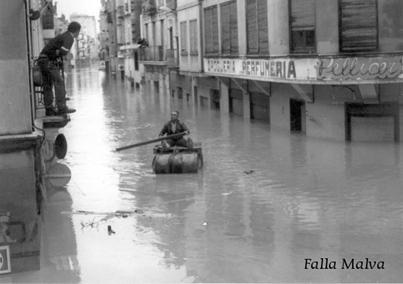
This link contains a photographic reportage of "Pantana" (the name by which is called this flood in Valencia realized by the falla plaza Malva  from Alcira (www.fallamalva.com)


picture of the flood, taken from the above link

BREAK OF THE TOUS DAM October 20, 1982 (Part 1)

On October 20, 1982, as a result of torrential rains caused by the cold drop, originated the worst flood in the history of Spain. Affecting Jucar basin that were more intense in the Valencia and Murcia.


On the night of 19 October, heavy rains began extending along the next day exceeding 600mm. Upstream Tous Swamp.
The river Jucar (Xuquer in Valencia, that comes from Arabic and its translation is the devastating) as it passes through the swamp of Tous, grew so that the weak walls and the lack of qualified personnel to hazardous situations in the dam joined inability to open the floodgates (because of the human factor) caused water to overflow the dam, and even when they got to open the floodgates, the amount of water was greater than the capacity of these. So finally broke down the dam. Causing a flood of 16,000 cubic meters per second, which devastated the regions of the Riera Alta and Riera Baja.


The populations most immediate to the dam came to have in their streets 8 meters high of water, such as Sumacàrcer, Beneixida or Gavarda.
The virulence of the water caused severe structural damage to most buildings, that's why Beneixida and Gavarda moved to higher ground, but Sumacàrcer remains in the same place.


This link contains a photographic reportage of "Pantana" (the name by which is called this flood in Valencia realized by the falla Plaza Malva from Alcira  (www.fallamalva.com)


picture of the flood, taken from the link above

ROTURA DE LA PRESA DE TOUS 20 de Octubre de 1982 (parte 2)


La población mas afortunada fue Sueca, que gracias a la albufera de Valencia evito la mas que segura catástrofe. Esto fue gracias a que el río se partió en dos desviándose a la Albufera por un lado y por el otro siguiendo el cauce natural hacia la desembocadura de Cullera. A pesar de salvarse, la ciudad quedo aislada como si de una isla fluvial se tratara.

La catástrofe pillo desprevenido a todo el mundo y sin saber como reaccionar (el propio gobierno de España no llegaba a creer lo que estaba sucediendo), el caos origino que la mayoría de los alcaldes mandara la evacuación a titulo personal, por falta de información y comunicación. Además, una de las pocas actuaciones preventivas, fue la apertura de las golas (compuertas de desagüe de la Albufera) por el alcalde de Valencia.

Hubo mas de 30 muertos y los daños materiales fueron enormes.

La contranota colorista, es que durante la rotura de la presa, dos mujeres se pusieron de parto dando a luz aun niño y a una niña, en el hospital de Alcira (ahora cerrado).

Este link contiene un reportaje fotográfico de la “Pantanà” (nombre por el que se llama a esa riada en Valencia realizado por la falla Plaza Malva de Alcira (www.fallamalva.com).


foto de la pantanà sacada del link de arriba

ROTURA DE LA PRESA DE TOUS 20 de Octubre de 1982 (parte 1)


El 20 de Octubre de 1982, a consecuencia de las lluvias torrenciales causadas por la gota fría, se origino la peor riada de la historia de España. Afectando a la cuenca del Jucar que fuero más intensas en la Comunidad Valenciana y la Región de Murcia.

La noche del 19 de Octubre, comenzaron las fuertes lluvias prolongándose a lo largo del día siguiente superando los 600 Mm. Aguas arriba del pantano de Tous.
El río Jucar (Xuquer en Valenciano, que proviene del árabe y su traducción es El Devastador) a su paso por el pantano de Tous, tubo tal crecida de aguas que los deficientes muros y la falta de personal cualificado para situaciones de riesgo en la presa sumado a la imposibilidad de abrir las compuertas (por culpa del factor humano) hicieron que el agua se desbordara de la presa, y aun cuando consiguieron abrir las compuertas, la cantidad de agua era mayor que la capacidad de estas. Así que finalmente se vino abajo la presa. Originando una crecida de 16.000 metros cúbicos por segundo, que arrasaron las comarcas de la Riera Alta y la Riera Baja.

Las poblaciones más inmediatas a la presa llegaron a tener en sus calles 8 metros de altura de agua, como por ejemplo Sumacàrcer, Beneixida o Gavarda.
La virulencia del agua causó graves daños estructurales en la mayoría de los edificios, es por eso que Gavarda y Beneixida se trasladaron a zonas más altas, aunque Sumacàrcer permanece en el mismo sitio.


Este link contiene un reportaje fotográfico de la “Pantanà” (nombre por el que se llama a esa riada en Valencia realizado por la falla Plaza Malva de Alcira (www.fallamalva.com)


foto de la riada sacada de el link de arriba 

30th ANNIVERSARY OF THE BROKEN OF THE TOUS DAM


Today October 20 marks the 30th anniversary of the breaking of the Tous dam, located in the region of the Riera Alta in the province of Valencia.
Suffering the worst flood in Spain.
Because of heavy rains due to the cold drop of 1982, the Tous dam (located between the towns of Tous and Millares) grew up to never known limits, exceeding the capacity of the dam and the responsible engineer.
Finally the dam gave way, flooding the whole region of the Riera Alta with maximum heights of 8 meters of water in the streets of some towns.


The old dam with a capacity of 80 cubic hectometers, could not withstand the pressure of the river Jucar (Xuquer in Valencian, name given by the Arabs who inhabited the Valencian Community, which translates as the devastating).
After the flood the dam was rebuilt with a current capacity of 340.4 cubic hectometers, modern sensors and with caution to reach these dates with minimum water.

This link contains a photographic reportage of "Pantana" (the name by which is called this flood in Valencia made ​​by the falla plaza Malva  from Alcira (www.fallamalva.com)


flood photo, taken from the Above link

30 ANIVERSARIO DE LA ROTURA DE LA PRESA DE TOUS 20 de Octubre de 2012


Hoy  20 de Octubre se cumplen 30 años de la rotura del embalse de Tous,  situada en la comarca de la Riera Alta en la provincia de Valencia.
La peor riada sufrida en España.
A causa de las fuertes lluvias consecuencia de La gota fría  del año 1982, el pantano de Tous (situado entre las poblaciones de Tous y Millares) creció hasta limites nunca conocidos, sobrepasando la capacidad de la presa y del ingeniero responsable.
Finalmente la presa cedió, inundando toda la comarca de la Riera Alta con alturas máximas de 8 metros de agua, por las calles de algunas poblaciones.
La vieja presa con una capacidad de 80 hectómetros cúbicos, no pudo soportar la presión del río Jucar (Xuquer en valenciano,  nombre que recibió de los Árabes que poblaron la comunidad Valenciana cuya traducción es el devastador).
Después de la riada se reconstruyo el pantano con una capacidad actual de 340,4 hectómetros cúbicos, modernos sensores y con la precaución de llegar a estas fechas con mínimos de agua.

Este link contiene un reportaje fotográfico de la “Pantanà” (nombre por el que se llama a esa riada en Valencia realizado por la falla Plaza Malva de Alcira (www.fallamalva.com)


foto de la Pantanà, sacada del link de arriba